
De Luna at “Ochuse” and the
Native world the Spanish entered
Read More
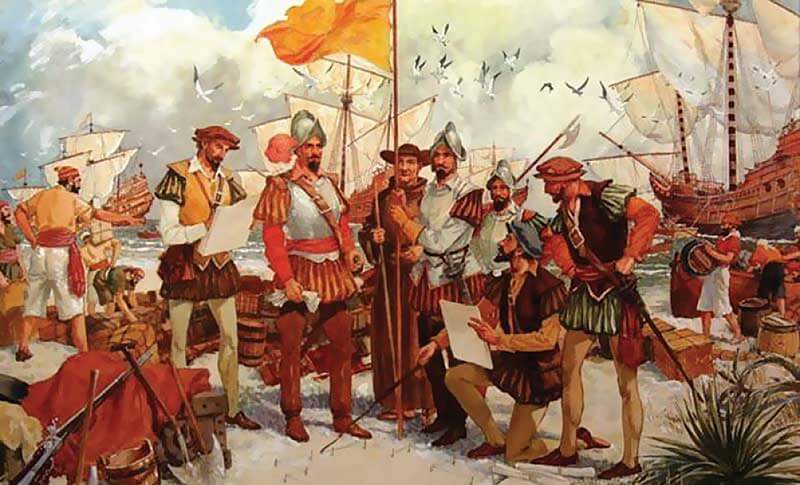
In the summer of 1559, the expedition of Tristán de Luna y Arellano arrived at Pensacola Bay called Ochuse in Spanish sources, intending to establish a lasting colony. But within weeks, a devastating hurricane struck September 19–20, 1559, destroying most of the fleet and much of the stored provisions.
Worth’s chronology also records something visitors rarely hear soon after the storm, Spanish parties pushed inland and encountered a large Native town called Nanipacana along the central Alabama River evidence that the Pensacola Bay landing sat within a wider, populated Native landscape connected by river corridors.
Today, archaeology keeps this early chapter visible. Shipwrecks associated with the Luna expedition have been found in Pensacola Bay, linking the written record to physical evidence beneath the water.

“Panzacola” and a
Gulf Coast borderlands in motion
Read More
After De Luna, Pensacola Bay remained strategically important so important that Spain repeatedly surveyed the coast when rumors spread of French intrusion. A widely used educational chapter by historian William S. Coker and colleagues’ recounts that during a 1686 expedition, officer Juan Jordán de Reina praised the harbor and reported that local Indians called themselves “Panzacola,” commonly glossed in the source as a Choctaw term meaning “long-haired people.”
Scholars also emphasize that the Panzacola are among the least clearly documented Native groups in the early record, in part because names, alliances, and settlements shifted under colonial pressure. (A recent UWF graduate thesis frames this as a key challenge in tracing the Panzacola through sparse documentation and limited archaeological signatures.)
For heritage travelers, that uncertainty is part of the truth: the 1600s Gulf Coast was a moving frontier, where Native communities adapted to a new world of disease, raiding, and imperial competition long before permanent European towns took root on the bay.
Spanish Pensacola begins, and
Native diplomacy becomes high-stakes
Read More
In 1698, Spain established Presidio Santa María de Galve at Pensacola Bay in direct competition with French ambitions. Coker and colleagues describe the rapid fort-building at Barrancas and the tense standoff as the French approached in early 1699.
This was not just a European chess match. Native alliances and rivalries mattered immediately. The same source describes how war reached the outpost in 1707, including siege pressure involving Native forces influenced by English interests.
A detail that still shapes local geography: in 1693, a Spanish scientific expedition surveyed and named features of the bay region, including the Blackwater River (recorded in this account as “Río de Almirante”).
Missions, refugee communities,
and the Native towns near Pensacola
Read More
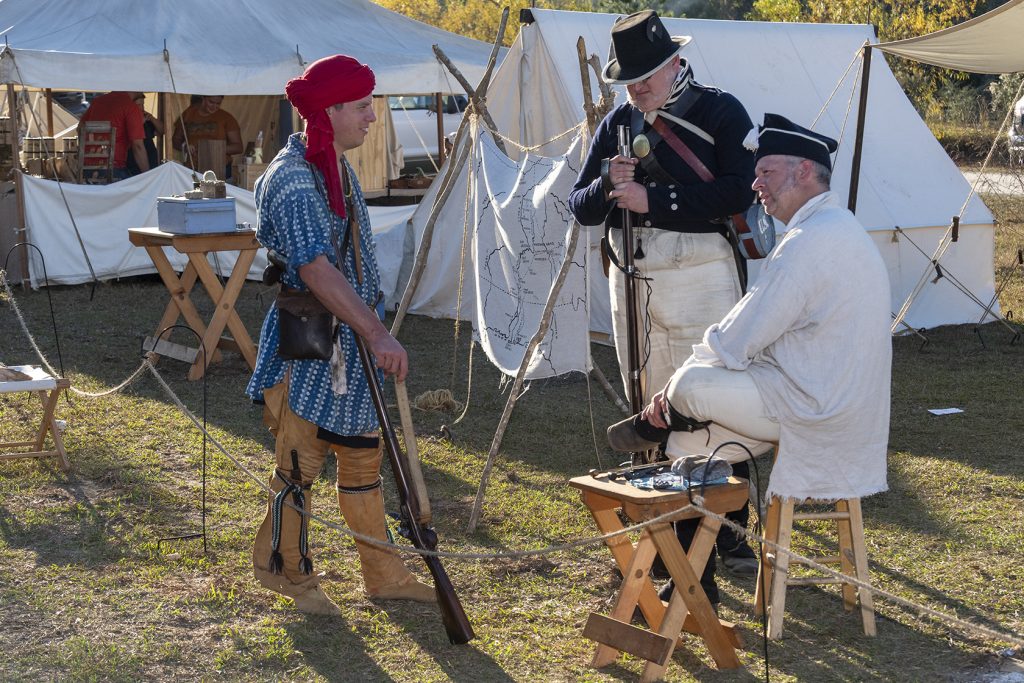
This era is where Dr. Worth’s work is especially important for a Native-centered view of Pensacola.
Refugee missions on the Escambia River and the bay
Worth documents how Pensacola and the Escambia River became home to mission communities made up of displaced Native people especially Apalachee and Yamasee refugees rebuilding life under Spanish protection.
Two key sites anchor this story:
- Mission San Joseph de Escambe (c. 1741–1761), an Apalachee mission community on the Escambia River. Worth explains that deteriorating Spanish-Creek relations and abuses at the frontier set the stage for violence, and he records the April 9, 1761, night attack that destroyed Escambe and forced survivors south toward Pensacola.
- Mission San Antonio de Punta Rasa (c. 1749–1761), a Yamasee mission community near today’s Garcon Point. Worth notes its role in trade and high-level diplomacy including the prominence of Yamasee leader Andrés Escudero before the mission was abandoned and destroyed amid 1761 raiding.
Destruction, refuge, and a
little-known diaspora
Read More
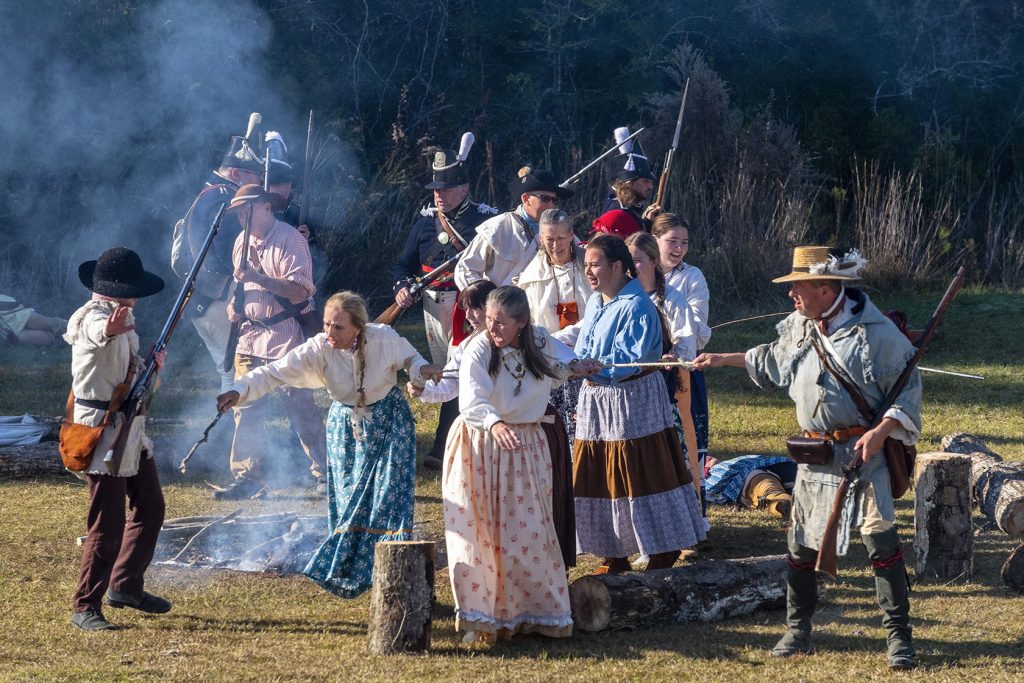
Worth’s “Lost Spanish Missions” paper preserves a powerful human outcome: after the 1761 raids, survivors clustered near the fort, and when Spain evacuated Pensacola in 1763, 108 Yamasee and Apalachee people departed with the Spanish for Veracruz, Mexico. Two years later, just 47 survivors laid out a new town north of Veracruz, with civic leadership reflecting both communities.
This is a key takeaway for visitors: Pensacola’s Native history is not only “local.” It is part of a wider Gulf world of forced movement, rebuilding, and cultural endurance.
Flags change —
Native life continues
Read More
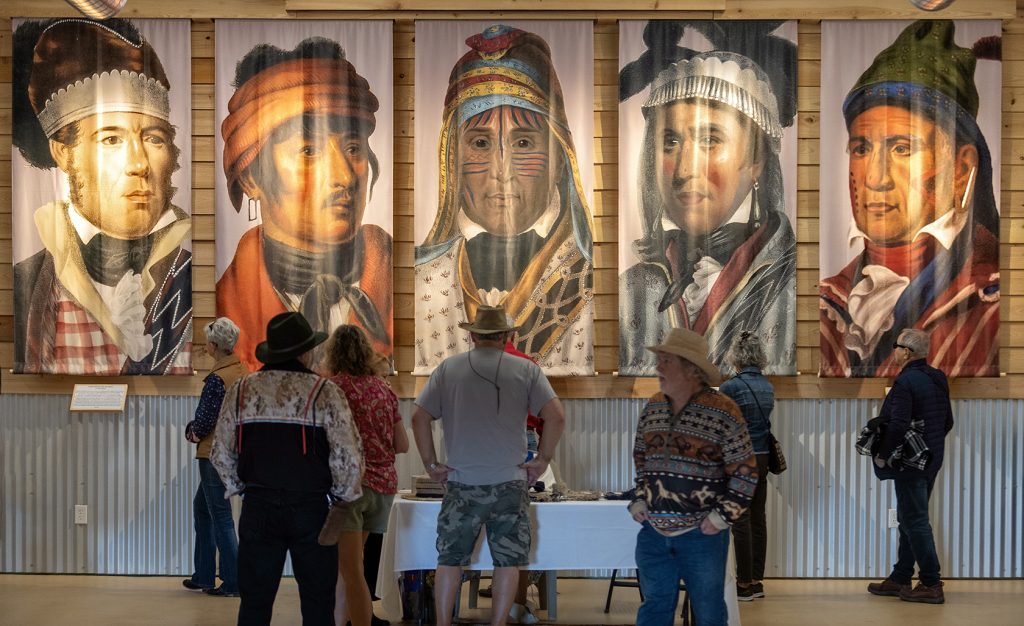
After 1763, Pensacola entered a new phase of rapid political change (British control and then Spain’s return). Worth summarizes how Florida’s later Spanish period population was not identical to the pre-1763 population, and how the region became increasingly connected to the growing United States to the north.
Through every regime change, Native people remained present in the surrounding waterways and pinewoods not as a vanished past, but as neighbors, traders, and communities navigating the tightening grip of colonial and then American expansion.

U.S. Florida, removal, and Native persistence into the Civil War era
Read More
When Florida became a U.S. territory in 1821, Native presence did not disappear from northwest Florida. Historian Dr. Brian R. Rucker (Pensacola State College) writes that although Andrew Jackson’s campaigns dispersed several hostile Creek groups, “scattered parties remained,” and that sizable bands lived in northwest Florida.
Rucker adds locally specific detail: after the Treaty of Moultrie Creek (1823), smaller Creek bands lived along St. Andrew’s, Choctawhatchee, Blackwater, and Escambia bays, and “Indians and half-bloods often visited Pensacola” to hunt, fish, pasture cattle, and obtain supplies.
By the Civil War era, Native communities and families in the wider region were living under the same pressures as their neighbors war, economic disruption, and contested identity while still carrying older ties to Creek towns and Gulf Coast homelands.
We Are Still Here
(Po Monken Heyvt os)
Read More
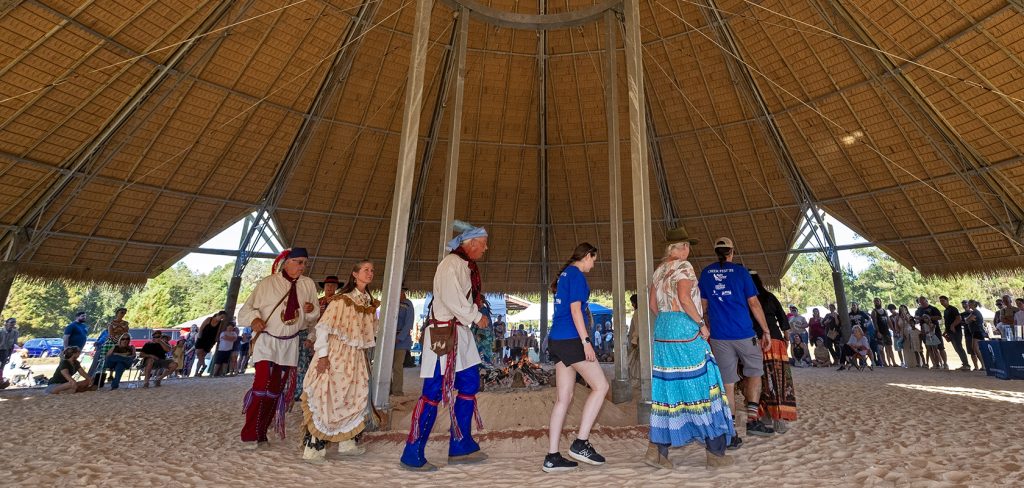
Creek communities today, including the Santa Rosa Creek Band and the Poarch Creek Indians
A complete tourism story should end where it began with living people.
Santa Rosa Band of the Lower Muscogee (Milton area)
The Santa Rosa Creek Band’s mission is promoting the education, culture, language and heritage of Creek people in Florida through outreach and traditional events.
On its own site, the Band highlights cultural interpretation on its grounds such as a “Living Village” that comes alive during Creek Fest, with early-1800s Creek lifeways demonstrated for visitors.
Community profiles also describe the Band’s focus on reviving and teaching Creek heritage through education and public events in the Pensacola Bay region.
Poarch Creek Indians (Escambia County, Alabama)
Just north of Pensacola, the Poarch Creek Indians are a Muscogee (Creek) descendant community based in Alabama. The Tribe’s official history emphasizes that Poarch ancestors avoided removal, remained in and around their community for nearly two centuries, and that the Tribe was federally recognized in 1984.
The Encyclopedia of Alabama adds Civil War-era detail, noting that dozens of Poarch Creek men volunteered for Confederate service and describing how the post-war period brought major hardship and discrimination.
Together, these communities remind visitors of a simple truth: Native history in and around Pensacola is not only something you read about, but also is something you can encounter respectfully through education, public programs, and cultural events today.