
Culture & History
Preserving our heritage, honoring our ancestors
Historic Timeline: Natives of Pensacola and the Creeks in Santa Rosa County
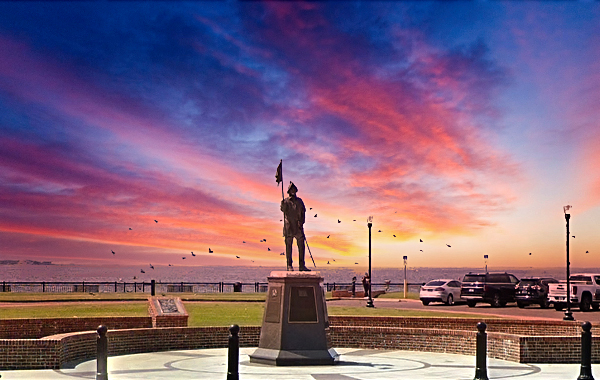
De Luna at Ochuse and the
Native World He Entered
Read More
In 1559, Tristán de Luna’s expedition entered Pensacola Bay, called Ochuse in Spanish records, hoping to build a permanent settlement and a strategic link into the interior. What matters for a Native-centered timeline is that the Spanish did not arrive in an empty land. They entered a Gulf world already tied together by Native towns, river routes, seasonal movement, and long-distance exchange.
The colony collapsed quickly after the hurricane of September 19–20, 1559. Yet even in failure, the episode revealed the larger Native geography of the region. Spanish scouting parties moved inland and encountered Native settlements connected to the Alabama River corridor, including Nanipacana. That inland movement shows that Pensacola Bay was part of a wider Native landscape rather than an isolated shoreline.
Credits and Sources
1559–1561 | De Luna at Ochuse and the Native World He Entered
- National Park Service, “De Luna Expedition – 1559–1561 CE,” Little River Canyon National Preserve.
- Dan Helms, “Native Pensacola: From De Luna’s Landing to the Civil War,” Visit Pensacola.
“Panzacola” and a Gulf Coast
Borderlands in Motion
Read More
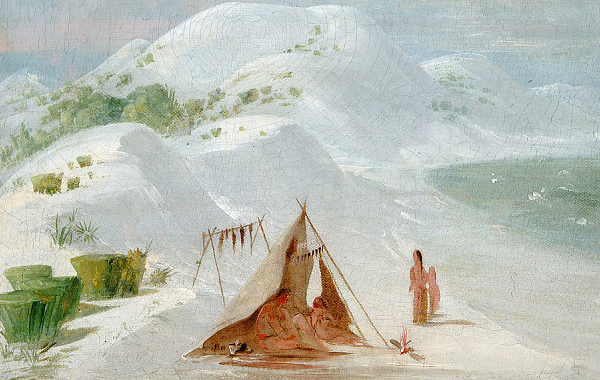
During the seventeenth century, the northern Gulf Coast was a shifting borderland shaped by epidemic disease, slaving raids, migration, diplomacy, and imperial rivalry. Sources from the era refer to Native people around the bay as Panzacola, but historians have long noted that the documentary trail is fragmentary and that names and alliances changed under pressure.
That uncertainty is itself historically important. It reminds us that the Native history of the Pensacola area cannot always be reduced to one tribe, one village, or one uninterrupted label in the written record. Communities merged, moved, regrouped, and adapted as colonial violence and trade reorganized the region.
In public history terms, the seventeenth century is best understood not as an empty gap between De Luna and later Pensacola, but as a period when Native communities were redefining survival in a changing world.
Credits and Sources
Painting: George Catlin, born Wilkes-Barre, PA 1796-died Jersey City, NJ 1872
Credit: Smithsonian American Art Museum, Gift of Mrs. Joseph Harrison, Jr.
1600s | Panzacola and a Gulf Coast
Borderland in Motion
- Museum of Florida History, “Later Settlements: Santa Maria de Galve, Santa Rosa, and Pensacola.”
Spanish Pensacola, Native Diplomacy,
and the First Great Tests
Read More
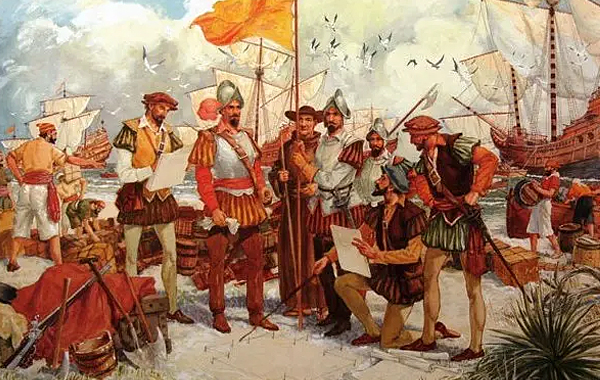
Spain founded Presidio Santa María de Galve at Pensacola Bay in 1698. The outpost was a military settlement, a civilian settlement, and a colonial experiment all at once. It stood in a difficult environment, plagued by shortage, disease, storms, desertion, and conflict.
Native diplomacy was central from the beginning. The bay itself was remembered in the sources as Panzacola, and Native alliances shaped whether the settlement could survive. In 1707, English-allied Indigenous forces attacked the Spanish settlement. The assault did not fully capture the fort, but it forced the inhabitants into a more defensive posture and underscored how unstable colonial Pensacola remained.
This is also the moment when the timeline begins to connect directly to later Creek history in the region. Pensacola was not simply a Spanish town on the edge of empire. It was a place where Native power, Native mobility, and Native diplomacy could still decide the fate of colonial projects.
Credits and Sources
Spanish Pensacola, Native Diplomacy,
and the First Great Tests
- Museum of Florida History, “Later Settlements: Santa Maria de Galve, Santa Rosa, and Pensacola.”
- Museum of Florida History, “Forts of Pensacola.”
Refugee Missions on the
Escambia and the Bay
Read More
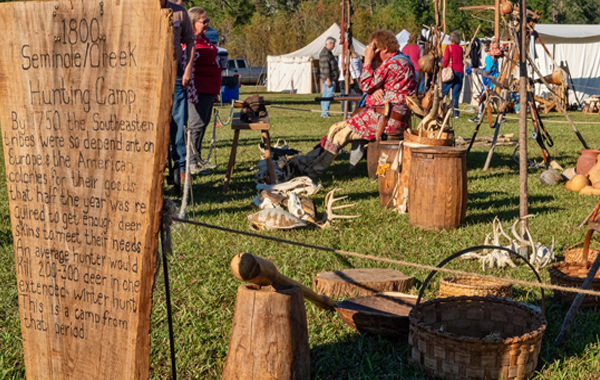
After the earlier presidio period, the Pensacola region became home to mission communities made up in part of displaced Native people rebuilding life under Spanish protection. Two of the most important were Mission San Joseph de Escambe on the Escambia River and Mission San Antonio de Punta Rasa near present-day Garcon Point.
These were not minor outposts. Escambe stood near the northern edge of Spanish influence and became one of the most important Native mission communities in the region. Punta Rasa, inhabited by Yamasee refugees, became significant in trade and diplomacy. The career of Yamasee leader Andrés Escudero shows that Native leaders around Pensacola were not passive dependents of Spain; they remained active negotiators shaping regional politics.
The Santa Rosa County dimension becomes clearer in this era. The Garcon Point and Escambia River corridor linked the bay, the river, and the interior in ways that made local Native communities central to the history of both Pensacola and the future county.
Credits and Sources
Refugee Missions on the Escambia and the Bay
- John E. Worth, “Mission San Joseph de Escambe, ca. 1741–1761,” University of West Florida.
- John E. Worth, “Mission San Antonio de Punta Rasa, ca. 1749–1761,” University of West Florida.
Treaty Lines, Frontier Abuse,
Raids, and Exile
Read More
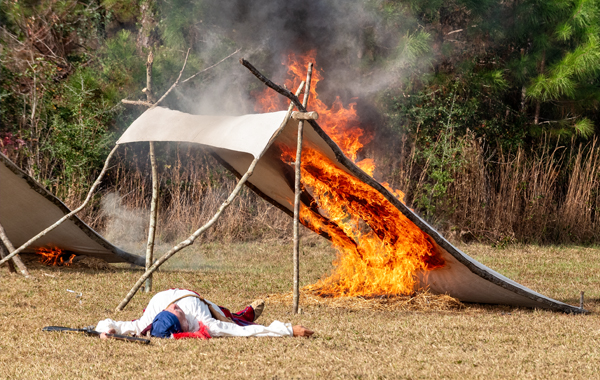
By the late 1750s, relations between the Spanish and the Creeks were increasingly strained. A 1759 agreement helped define the boundary between Spanish-controlled space and Creek country, and local memory preserved Boundary Line Creek as a reminder of that frontier geography. But formal diplomacy did not remove the deeper tension at the edge of empire.
The breaking point came in 1761. At Punta Rasa, Creek violence followed mounting anger over abuses in the Pensacola trade, including misconduct and exploitation by Spanish personnel. On February 12, 1761, the Garcon Point mission was attacked. On April 9, a Creek raid destroyed Mission Escambe. These events ended the last major mission communities north of Pensacola and sent survivors south toward the fort.
The consequences were not only local. When Spain evacuated Pensacola in 1763 at the end of the Seven Years’ War, Yamasee and Apalachee survivors left with the Spanish for Veracruz. Two years later, only a fraction remained to establish a new town there. This is one of the clearest examples of Pensacola’s Native history extending outward into a larger Gulf world of forced movement, survival, and rebuilding.
Credits and Sources
Treaty Lines, Frontier Abuse, Raids, and Exile
- John E. Worth, “Mission San Joseph de Escambe, ca. 1741–1761,” University of West Florida.
- John E. Worth, “Mission San Antonio de Punta Rasa, ca. 1749–1761,” University of West Florida.
- John E. Worth, “Rediscovering Pensacola’s Lost Spanish Missions” (paper presented 2008).
- Florida State Parks, Yellow River Marsh Preserve State Park history page.
- Additional local boundary-line and treaty detail retained from the supplied Santa Rosa County timeline and its bibliography.
British West Florida and
Continuing Native Use of the Region
Read More
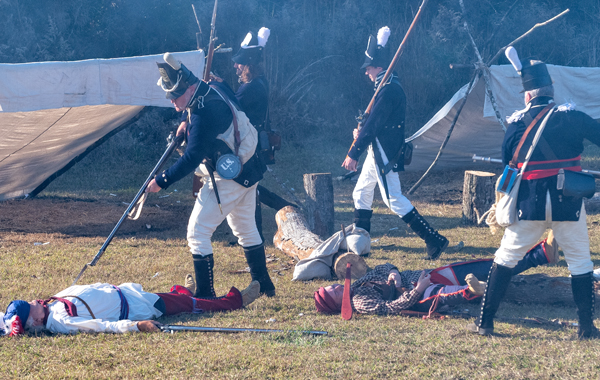
British control did not erase Native presence. Across this period, Native people continued to hunt, travel, trade, and negotiate across the pinewoods, rivers, and bays of what would later become Santa Rosa County.
A 1773 map by Bernard Romans and David Taitt placed Coosada hunting grounds east of the Escambia River, showing that the area remained part of a Native-used landscape even after the old Spanish mission world had been broken apart. That detail matters because it demonstrates continuity. Flags changed, but Native use of the land did not suddenly end.
This segment should be read as a bridge between the mission era and the later Creek settlements and conflict zones of the early nineteenth century.
Credits and Sources
- Supplied Santa Rosa County timeline, including its note on the 1773 Bernard Romans and David Taitt map.
- University of West Florida Spanish Florida maps page listing the 1773 Bernard Romans map.
- Johnson, Cecil. British West Florida, 1763–1783 (listed in the supplied bibliography).
Spanish Return, Trade, Cattle, and
Creek Settlement Along the Escambia
Read More
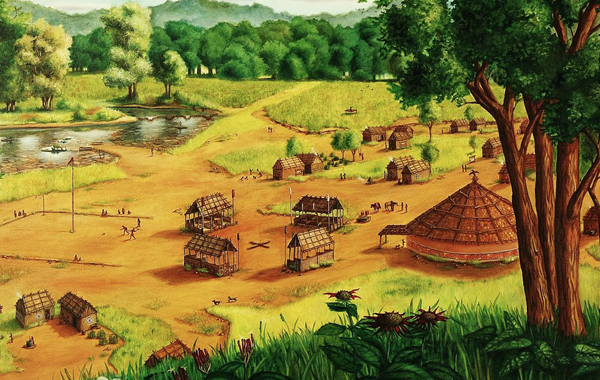
When Spain regained West Florida in 1783, Pensacola once again became a center of Native-colonial exchange. The Panton, Leslie trading system tied Creek communities to a Gulf-wide economy in which deer skins, cattle, horses, firearms, cloth, metal goods, and credit all played a role.
Alexander McGillivray’s connection to the company illustrates how intertwined diplomacy and commerce had become. Trade was not simply economic. It shaped political alliances, created dependency and leverage, and helped define Spanish relations with Creek towns during the late colonial period.
Local evidence shows that Creek families were already established in the wider Escambia corridor by the early 1780s. Reports of planting, livestock, and family settlement suggest that Creek people in and around present-day Santa Rosa County were not merely passing through. Many were building agricultural lives in a region that still offered room beyond the direct reach of the United States.
Credits and Sources
- Florida Humanities, “Twilight of the Spanish, 1780s–1821.”
- Encyclopedia of Alabama, “Panton, Leslie & Company.”
- Encyclopedia of Alabama, “Alexander McGillivray.”
- Coker, William S., and Thomas D. Watson, Indian Traders of the Southeastern Spanish Borderlands: Panton, Leslie & Company and John Forbes & Company, 1783–1847 (listed in the supplied bibliography).
- Additional local settlement detail retained from the supplied Santa Rosa County timeline.
The Creek War, Chumuckla,
Floridatown, and the Invasion Corridor
Read More
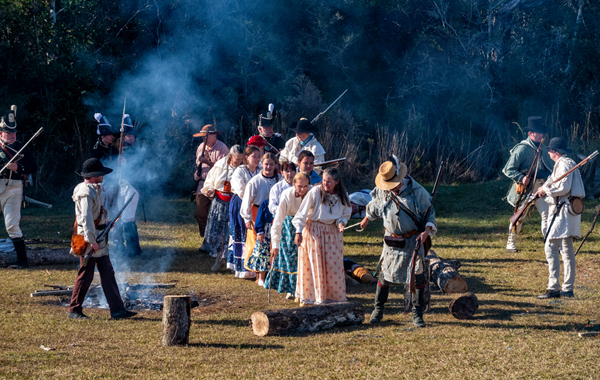
The Creek War of 1813–1814 transformed the Gulf South. After Andrew Jackson’s victory at Horseshoe Bend, many Red Stick Creeks fled into Spanish West Florida. That movement brought the conflict directly into the Escambia River valley, Chumuckla, Floridatown, and adjoining parts of what is now Santa Rosa County.
Evidence from 1814 makes clear that these were not random hideouts. American reports described Creek residents at Chumuckla growing substantial acreage in corn, beans, pumpkins, and other crops. The community also occupied a strategically important crossing for driving cattle over the Escambia River. Nearby Floridatown and the bay shore likewise became part of the war zone.
In the same year, British involvement in Pensacola and the U.S. raids led by George Nixon and later the expedition under Uriah Blue turned northwest Florida into an invasion corridor. Jackson’s seizure of Pensacola in 1814, followed by his return in 1818 during the First Seminole War, made clear that Spanish Florida had ceased to be a secure refuge for Creek refugees.
Credits and Sources
The Creek War, Chumuckla, Floridatown, and the Invasion Corridor
- Historic Timeline for the Creeks in Santa Rosa County, Florida (supplied source text).
- Rucker, Brian R., “Nixon’s Raid and Other Precursors to Jackson’s 1814 Invasion of Spanish West Florida” (listed in the supplied bibliography).
- Florida Humanities, “Twilight of the Spanish, 1780s–1821.”
U.S. Florida and the
Persistence of Native Life
Read More
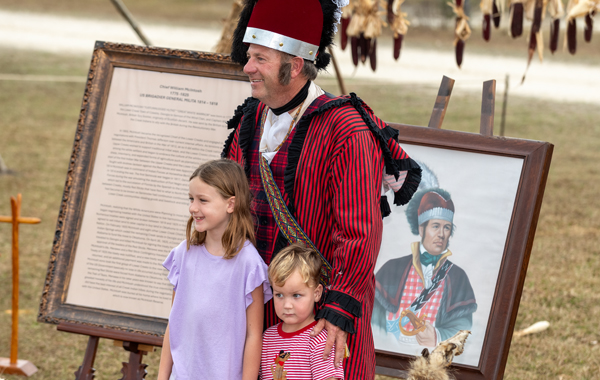
Florida became a U.S. territory in 1821, but Native people did not disappear from the region. Historians of northwest Florida have shown that Creek families, mixed-ancestry households, and smaller bands still lived along the Blackwater, Escambia, Choctawhatchee, and St. Andrew’s Bay systems after formal U.S. control began.
That continued presence appears in both broad regional scholarship and local references. Native people came into Pensacola to obtain supplies, hunted and fished in the surrounding country, and used the region’s rivers and bays as corridors for movement and cattle pasture. Reports from Pond Creek and the Santa Rosa peninsula likewise show that the old patterns of Native use did not stop with the transfer of sovereignty.
This period is important because it resists a familiar myth. U.S. territorial rule did not produce an immediate Native absence. Instead, it produced a more pressured and precarious Native presence.
Credits and Sources
- Brian R. Rucker, “West Florida’s Creek Indian Crisis of 1837,” Florida Historical Quarterly 69, no. 3 (1990), available through UCF STARS.
- Lucius F. Ellsworth, “West Florida’s Forgotten People: The Creek Indians From 1830 until 1970,” Florida Historical Quarterly 59, no. 4 (1980), available through UCF STARS.
- Historic Timeline for the Creeks in Santa Rosa County, Florida (supplied source text).
War Returns: the Second Seminole War
and the Creek Crisis in West Florida
Read More
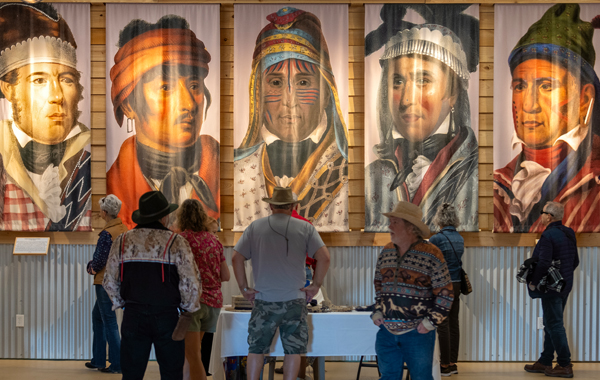
The outbreak of the Second Seminole War in 1835 and the Second Creek War in 1836–1837 brought renewed violence to the Florida panhandle. As conflict spread from Georgia and Alabama, additional Creek people moved or fled into West Florida, and local communities again became entangled in military campaigns, rumor, retaliation, and scarcity.
Santa Rosa County and the surrounding bays became part of that crisis. Contemporary reports placed Creek people at Blackwater Bay, East Bay, and Santa Rosa Sound. In April 1837, Creeks were attacked at Lumberton on the Blackwater River. Through the summer, skirmishes and alarms continued across the region, and some Creeks later surrendered or were removed west.
These years also preserve traces of Native persistence beyond formal warfare. George Catlin’s 1834–1835 painting of Native people drying red fish on Santa Rosa Island shows that Native life along the coast remained visible even in the years when federal and local authorities were trying to extinguish or expel it.
Credits and Sources
- Brian R. Rucker, “West Florida’s Creek Indian Crisis of 1837,” Florida Historical Quarterly 69, no. 3 (1990), available through UCF STARS.
- Lucius F. Ellsworth, “West Florida’s Forgotten People: The Creek Indians From 1830 until 1970,” Florida Historical Quarterly 59, no. 4 (1980), available through UCF STARS.
- Historic Timeline for the Creeks in Santa Rosa County, Florida (supplied source text).
Hiding in
Plain Sight
Read More
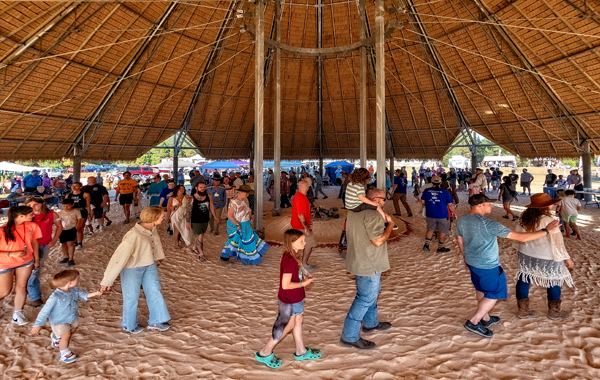
Florida’s anti-Indian legislation of the early 1850s deepened the pressure on Native families who had remained in the state. A state law made it unlawful for Indians to remain in Florida, while exempting Indians and people of mixed ancestry who were residing among whites. In practice, such measures encouraged concealment, selective assimilation, and the quiet reshaping of identity for survival.
This is one of the most important long-term themes in the local record. Many Creek families in northwest Florida did not leave. Instead, they adapted. Depending on complexion, marriage ties, church affiliation, and local circumstance, some blended into white communities and some into Black communities, often while retaining memory, kinship, and selected traditions beneath the surface.
For public interpretation, this is the point where the story must move beyond removal maps and military campaigns. Survival in nineteenth-century northwest Florida often depended on becoming less visible in the public record while remaining very visible within family and community memory.
Credits and Sources
- Jane E. Dysart, “Another Road to Disappearance: Assimilation of Creek Indians in Pensacola, Florida, During the Nineteenth Century,” Florida Historical Quarterly 61, no. 1 (1982), available through UCF STARS.
- Lucius F. Ellsworth, “West Florida’s Forgotten People: The Creek Indians From 1830 until 1970,” Florida Historical Quarterly 59, no. 4 (1980), available through UCF STARS.
- Bureau of Indian Affairs petition narrative discussing Florida’s anti-Indian law and its effects on Native communities in the state.
Memory, Cemeteries,
and Surviving Families
Read More
Late nineteenth- and early twentieth-century references suggest that Creek identity remained present in ways both subtle and material. Reports placed Creek people near the headwaters of East River, and family names connected to Creek ancestry continued to appear in local memory.
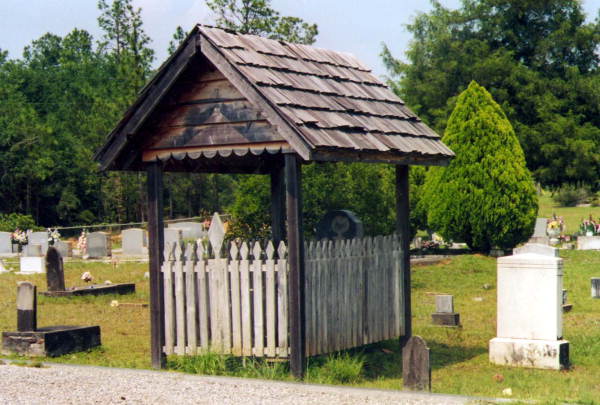
The appearance of Creek grave houses in county cemeteries between the late nineteenth century and the early twentieth century is especially significant. Even where language and public tribal identity were suppressed, burial practices and family remembrance could preserve cultural distinction.
By 1900, Creek families were still being identified between the Yellow River and East River. This does not describe a large, politically independent nation in the old sense. It does, however, document continuing Native existence in the very landscape where older histories often claim Indians had already vanished.
Credits and Sources
- Historic Timeline for the Creeks in Santa Rosa County, Florida (supplied source text).
- Ellsworth and Dysart, “West Florida’s Forgotten People,” for continuity of Creek communities in West Florida.
- Open digital documentation for some cemetery and family references was limited at the time of revision; those details are therefore retained cautiously from the supplied timeline and bibliography.
Archaeology, Public History,
and Living Communities
Read More
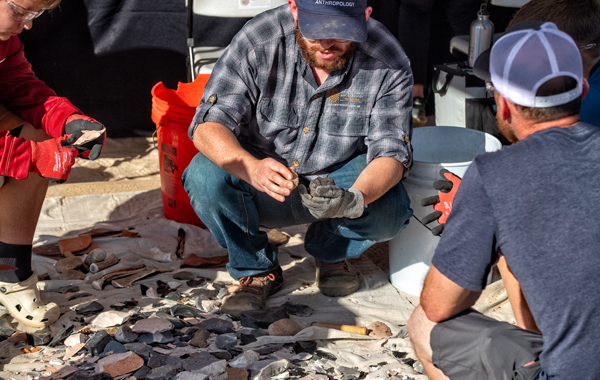
Recent archaeology has reinforced what family and local historical memory long suggested: Creek-connected occupation in northwest Florida did not belong only to distant colonial textbooks. Excavations south of Chumuckla near Delaney Creek identified Creek-related pottery at a colonial-era cabin site, strengthening the case for Creek occupation in the Santa Rosa County interior during the late eighteenth and early nineteenth centuries.
At the same time, public history has increasingly begun to reconnect Pensacola’s better-known colonial story to the Native communities who shaped it. The rediscovery of mission sites, the study of early maps and trade networks, and the interpretation of local war sites all point in the same direction: Native history is not an appendix to Pensacola history. It is part of the main story.
That remains true in the present. The Santa Rosa Band of the Lower Muscogee continues cultural and educational work in northwest Florida, while the Poarch Creek Indians in Alabama represent another enduring Creek descendant community whose history also grew from those who remained in the Deep South rather than disappearing from it.
Credits and Sources
and Living Communities
- Brian Rucker, Historic Timeline for the Creeks in Santa Rosa County, Florida, including its bibliography reference to Cole Smith’s Keyser Homestead research.
- John E. Worth, “Rediscovering Pensacola’s Lost Spanish Missions” and related University of West Florida mission research.
- Santa Rosa Band of the Lower Muscogee official site.
- Poarch Creek Indians official history page.
- Federal Register / Bureau of Indian Affairs documentation on Poarch recognition.
Stories & Traditions
The living traditions that connect us to our ancestors
Oral Traditions
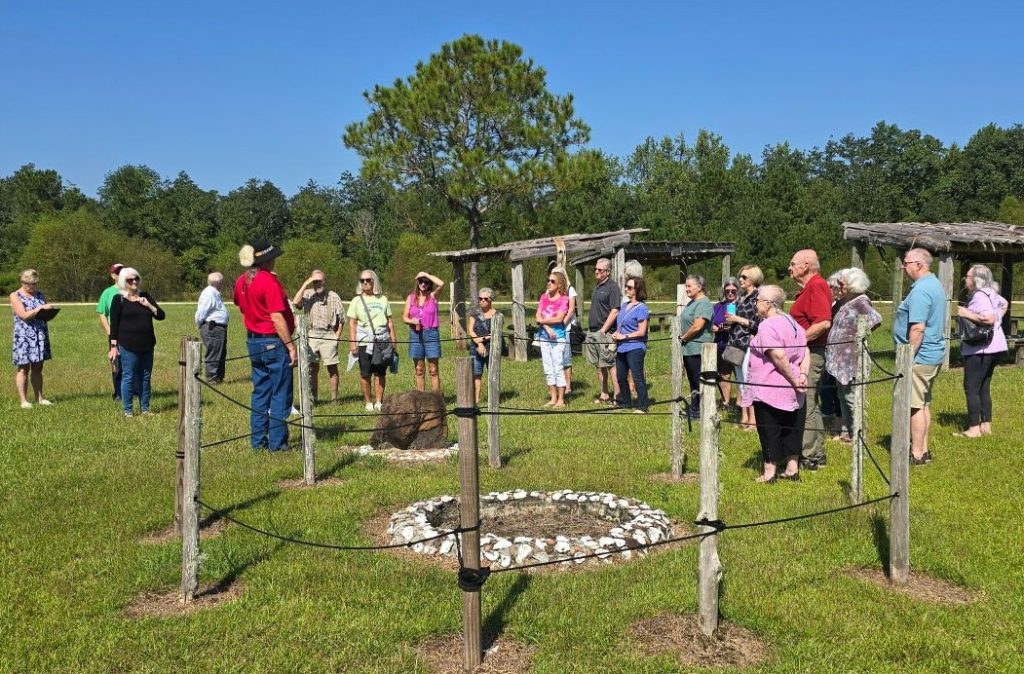
Storytelling has always been central to Creek culture. Through stories passed down through generations, we preserve our history, teach values, and maintain our connection to the past. Elders share creation stories, historical accounts, and moral lessons that continue to guide our community.
We hold regular storytelling events where community members gather to listen to traditional tales told in both Mvskoke and English.
Dance & Ceremonies
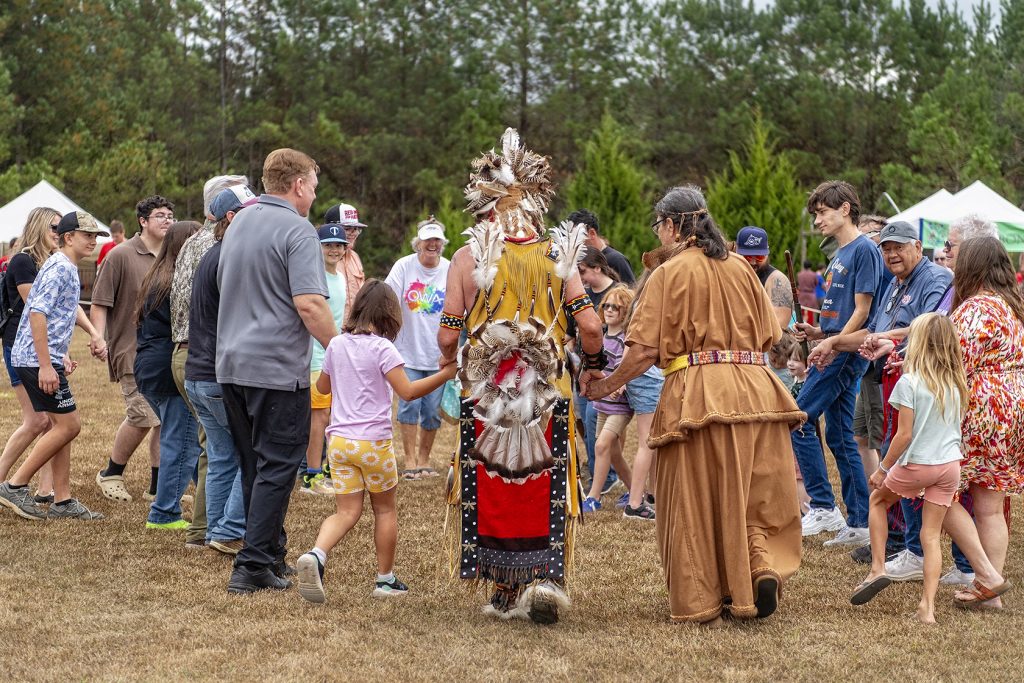
Traditional Creek dances and ceremonies are sacred expressions of our spirituality and community bonds. From social dances to ceremonial gatherings, these practices connect us to our ancestors and to each other.
Throughout the year, we hold ceremonies that mark important occasions and maintain spiritual connections. Many of these traditions are shared during Creek Fest and other community events.
Traditional Arts & Crafts
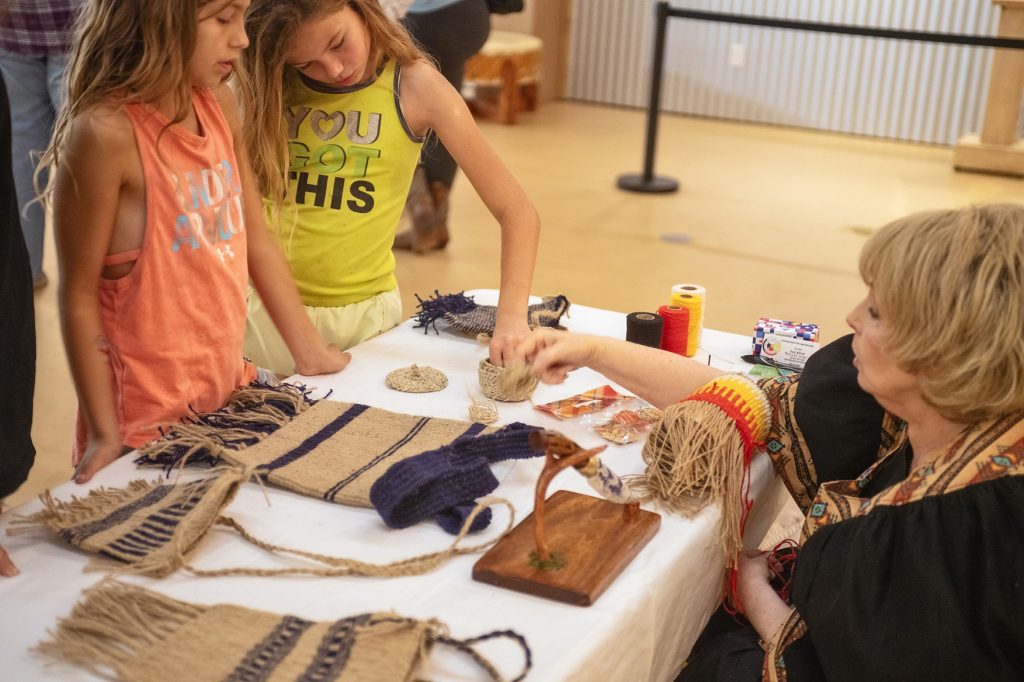
Creek artistic traditions include basket weaving, beadwork, pottery, and traditional regalia making. These crafts are not just artistic expressions but carry cultural significance and traditional knowledge.
We offer workshops where master artisans teach these traditional skills to younger generations, ensuring these important practices continue. Many handcrafted items are available in our store.
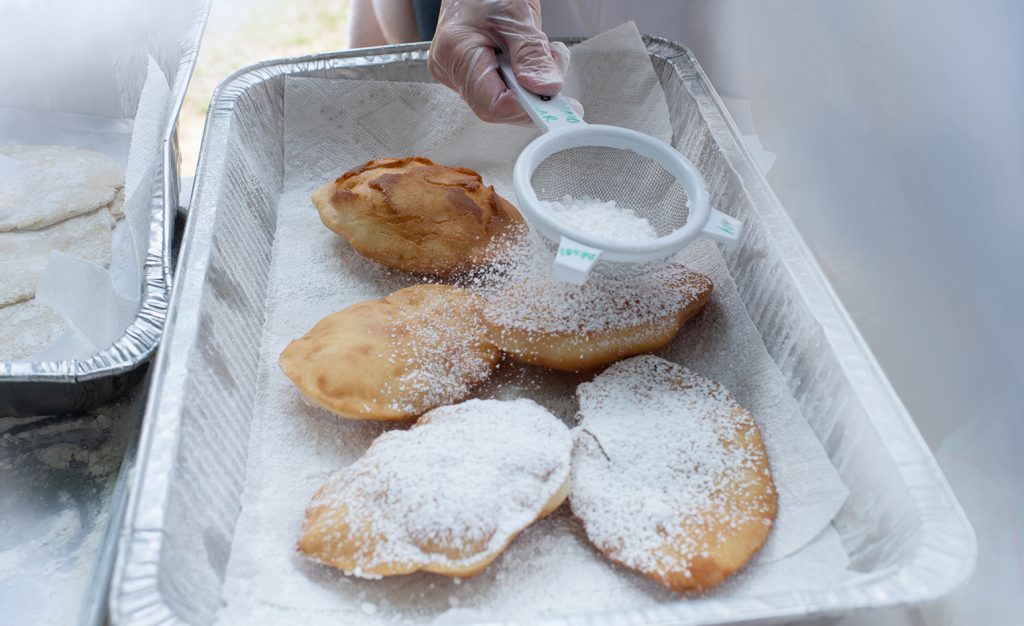
Traditional Foods
Creek cuisine reflects our deep connection to the land. Traditional foods include corn-based dishes, wild game, fish, native plants, and seasonal ingredients that have sustained our people for generations.
At community gatherings and events, traditional foods are prepared using time-honored methods, allowing us to literally taste our heritage and pass these culinary traditions to future generations.
Visit Our Cultural Sites
Experience our heritage firsthand through guided tours, cultural center visits, and special events. We welcome respectful visitors who want to learn about Creek history and culture.
Sites & Heritage
Sacred places and significant locations that tell our story
Tribal Grounds
Our tribal headquarters and ceremonial grounds are located in Milton, Florida, along the historic Santa Rosa Creek. This land serves as the heart of our community, hosting gatherings, ceremonies, and cultural events throughout the year.
The grounds include The Round House (ceremonial space), The Cultural Center (museum and education facility), and outdoor gathering areas that connect us to the natural environment.
Cultural Center
Our Cultural Center houses exhibits on Creek history, traditional arts, and cultural practices. Visitors can view artifacts, learn about Mvskoke language and traditions, and participate in educational programs.
The center offers guided tours, hosts workshops and classes, and serves as a resource for tribal members and the broader community to learn about Creek heritage.
Santa Rosa Creek Band
The creek that gives our band its name has been central to our people for generations. This waterway provided sustenance, transportation, and spiritual connection to the land.
Today, we maintain our connection to the creek through environmental stewardship, traditional practices, and education about the importance of protecting these sacred waters.
Heritage Sites
Throughout Northwest Florida, there are locations of historical and cultural significance to the Creek people. These sites tell the story of our ancestors’ presence and connection to this land.
We offer guided heritage tours that visit significant locations and share the stories and history associated with these special places. Contact us to schedule a tour.
Frequently Asked Questions
Common questions about our culture and history
What does 'Lower Muscogee' mean?
The term ‘Lower Muscogee’ refers to Creek people who historically inhabited the lower portions of Creek territory, particularly in areas of what is now Florida and southern Alabama. The Muscogee (Creek) Nation was historically divided into Upper and Lower Creek towns based on their geographic locations.
What is the Mvskoke language?
Mvskoke (also spelled Muskogee) is the traditional language of the Muscogee (Creek) people. It is part of the Muskogean language family and has been spoken by our ancestors for centuries. We offer language classes and resources to help preserve and revitalize this important part of our heritage.
What is Creakfest?
Creek Fest is our annual cultural celebration that brings together tribal members and the broader community. The event features traditional dancing, drumming, storytelling, craft demonstrations, and authentic Creek cuisine. It’s an opportunity to share our culture and heritage with everyone.
How do you preserve traditional practices?
We preserve our traditions through active practice and teaching. This includes language classes, traditional arts and crafts workshops, ceremonial gatherings, storytelling events, and mentorship programs where elders share knowledge with younger generations.
Can non-tribal members learn about Creek culture?
Yes! We welcome respectful interest in our culture. We offer educational programs, host public events like Creek Fest, provide guided tours, and have cultural presentations available. We believe that sharing our heritage promotes understanding and respect.
What are some important cultural values?
Key Creek values include respect for elders, connection to the land, community responsibility, balance and harmony, hospitality, and the importance of passing knowledge to future generations. These values guide our community and cultural practices.
What traditional craft do you practice?
Our people practice various traditional crafts including basket weaving, beadwork, pottery, traditional clothing and regalia making, woodcarving, and shell work. Many of these items are available in our online store, and we offer craft workshops throughout the year.
How can I learn more about Creek history?
Visit our Cultural Center, attend our educational programs, explore our online resources, and participate in guided heritage site tours. We also have partnerships with local museums and educational institutions that feature Creek history and culture.
Have more questions? We’re here to help.